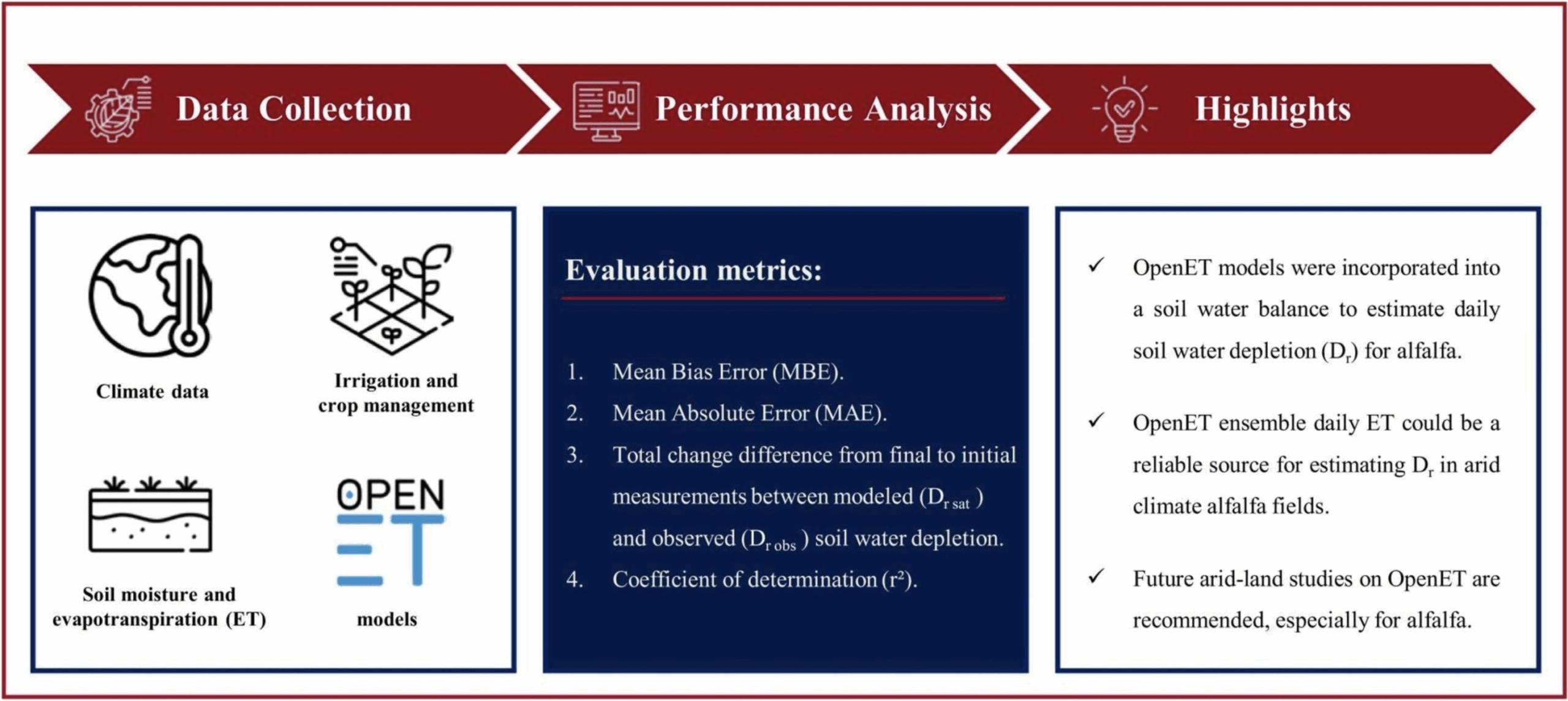
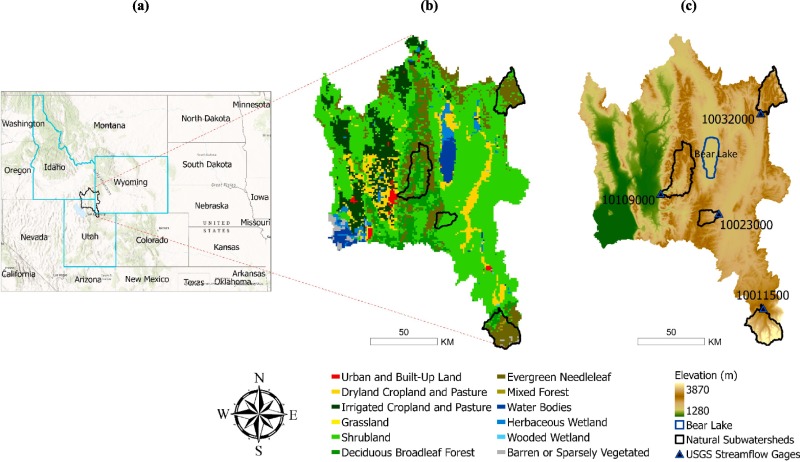
This study compared evapotranspiration (ET) data from the diagnostic, satellite-driven OpenET modeling platform with ET from the prognostic U.S. National Water Model (NWM), in the Bear River Basin, U.S. ET estimates from each national-scale modeling system were compared, and evaluated against water balance ET, derived from gridded precipitation and streamflow measurements. This analysis provides an example of how prognostic-diagnostic modeling systems can be used synergistically, at basin scale, to evaluate the spatial and temporal biases and errors in both systems. Monthly ET simulations from the NWM version 2.1 retrospective analysis over the Bear River Basin were compared with OpenET data from 2017 to 2020 at monthly and seasonal timescales, aggregated to match the 1-km NWM grid. OpenET provides estimates of ET calculated using six different diagnostic remote sensing models, as well as an ensemble average estimate. Results suggest agreement between the NWM and OpenET assessments at the 1-km scale, but with notable discrepancies for some land cover types, such as agriculture and riparian areas. The NWM showed less spatial variability and tended to predict lower ET fluxes compared to OpenET, particularly from June to August. In comparison with water balance estimates of ET in four natural sub-watersheds within the Bear River Basin, OpenET model estimates were generally biased high in two sub-watersheds dominated by evergreen forest. Results from this study provide useful information for both NWM and OpenET developers and researchers, demonstrating the power of comparing prognostic and diagnostic modeling systems. This study serves as a prototype for broader assessment of both NWM and OpenET via intercomparison in other regions, as well as an approach for quantifying uncertainty in both prognostic and diagnostic models where observational data are limited.
Estimating irrigation consumptive use for the conterminous United States: coupling satellite-sourced estimates of actual evapotranspiration with a national hydrologic model
Irrigation consumptive use is crucial information for water resource management